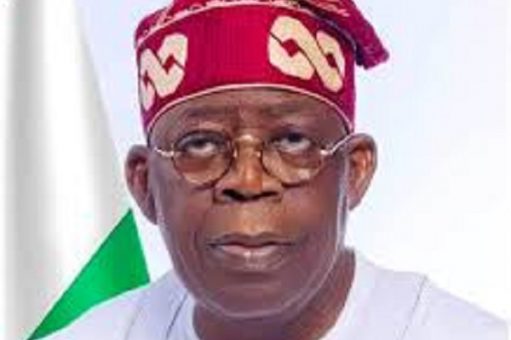

President Bola Tinubu is expected to present the 2026 federal budget to the National Assembly on Friday, even though the federal government has yet to publish a budget implementation report for the 2025 fiscal year as of December.
Nigeria’s Fiscal Responsibility Act (FRA) 2007 requires the publication of quarterly budget implementation reports.
Section 30 of the Act mandates the Minister of Finance to monitor and evaluate budget implementation and publish a report “not later than 30 days after the end of each quarter” in the mass media and on official government platforms.
Section 50 of the Act further requires the publication of a consolidated budget execution report within six months after the end of a financial year.
It is December and no quarterly implementation report for the 2025 fiscal year has been published.
The absence of the report coincides with repeated roll-overs of budget cycles by the federal government.
On Wednesday, the Minister of Finance, Wale Edun, told lawmakers that delayed approvals, weak revenue inflows and cash-flow constraints had disrupted implementation timelines.
He added that these issues had forced capital projects to be carried forward into subsequent fiscal years.
While appearing before the Senate Committee on Finance, Edun said the federal government would realise about N10 trillion out of a projected N40 trillion in revenue for the 2025 fiscal year.
He said the shortfall had compelled the rollover of a significant portion of capital expenditure into the next budget cycle.
Edun also told lawmakers that the capital component of the 2024 budget had been extended into 2025 and that part of the remaining capital allocation for 2025 was likely to be rolled into 2026, subject to National Assembly approval.
PROMISES BY TINUBU
This extension comes despite earlier commitments by the president to ensure diligent budget implementation and fiscal discipline.
When signing the 2024 Appropriation Act into law, Tinubu pledged that all Ministries, Departments and Agencies (MDAs) would submit monthly performance reports and that spending would be closely tracked.
“Implementation of the budget would be efficiently pursued and vigorously monitored… All MDAs have been directed to take responsibility and provide monthly Budget Performance Reports,” Tinubu said at the time.
The president also named himself chairman of the Economic Coordination Council, which was tasked with monitoring budget execution.
THE JANUARY–DECEMBER BUDGET CYCLE
In 2019, the National Assembly moved to regulate budget timelines. Under the leadership of Ahmad Lawan, the then senate president, and Femi Gbajabiamila, the speaker, lawmakers enforced deadlines that required the president to present the budget by October 31 and ensured passage by December.
This change made it possible to return to a January–December fiscal cycle starting in 2020.
The 2020 budget, for instance, was presented on October 29, passed on December 17 and signed into law the next day.
SUPPLEMENTARY BUDGET AND TIMELINE DISRUPTION
That cycle was disrupted following Tinubu’s 2023 supplementary budget. In November 2023, the president presented a N2.17 trillion supplementary budget to the National Assembly.
According to the Presidency, the additional spending was intended to address emergency needs, including security, road infrastructure and palliatives following the removal of fuel subsidy.
While supplementary budgets are not unusual, this one was approved with an extended implementation window running until December 2024.
Tinubu subsequently sought approval twice to extend the implementation period of the 2023 supplementary budget, first in March and again in June 2024.
The justification in both instances was the need to accommodate capital projects that had not been completed.
In June 2024, Opeyemi Bamidele, the senate majority leader, said the extension was necessary to allow key projects nearing completion to be finished and to avoid abandoned projects.
SPILL OVER EFFECT
The disruption continued into the 2024 budget process. The Fiscal Responsibility Act requires the president to present the budget to the National Assembly by October 31 or early November.
“The Executive Arm of the Federal Government shall, at least 30 days before the deadline for the submission of its budget proposals, place, at the disposal of the National Assembly, the revenue estimates for the following year,” the Act states.
However, Tinubu presented the 2024 budget at the end of November 2023, weeks before the start of the fiscal year.
At the presentation, Edun acknowledged the delay, saying the new administration needed time to align its priorities with spending targets, while promising timely submissions going forward.
But this did not turn out to be the case. FIJ for instance, had reported how Nigeria was still running less than half of the 2024 budget as of June 2025.
LEGISLATIVE CONCERNS
Lawmakers have called out the cycle and reporting lapses multiple times.
Danjuma Goje, chairman of the Senate Committee on Finance, said the repeated implementation of multiple budgets at the same time weakens legislative oversight.
He said lawmakers were being asked to consider new budgets while projects approved in earlier years were still being executed.
Other senators, including Ireti Kingibe and Victor Umeh, questioned why borrowing approvals previously granted by the National Assembly had not translated into improved budget execution and asked the executive to explain the continued rollover of capital projects.
The House of Representatives has also raised concerns over delayed budget performance reporting and overlapping budget cycles.
The House Committee on Appropriations earlier queried the Ministry of Finance and the Budget Office over delays in publishing implementation reports and deviations from approved timelines.
REPORTING GAPS
The continued overlap has affected budget reporting. The 2024 budget has not fully closed, with capital releases and project execution extending into 2025.
As a result, data that would ordinarily feed into a comprehensive 2025 implementation report, particularly on capital spending and project completion, remains incomplete.
The Budget Office of the Federation has acknowledged delays in publishing recent reports and said outstanding implementation reports would be released.
They, of course, pointed to extended budget cycles and verification processes as the basis.
However, the Fiscal Responsibility Act does not provide exemptions for delayed approvals or overlapping budget cycles, maintaining quarterly reporting as a statutory requirement.
As the National Assembly prepares to receive the 2026 budget proposal, it will do so without a publicly available implementation report for the 2025 fiscal year, even as projects and expenditures from earlier budgets continue to roll over into new fiscal years.