
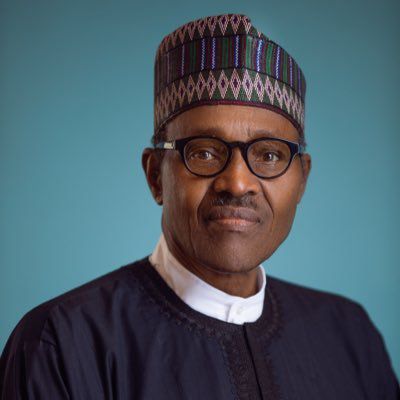
TWITTER BAN, NAIRA REDESIGN, AND EIGHT OTHER POLICIES BUHARI IMPLEMENTED THAT MADE LIFE UNCOMFORTABLE FOR NIGERIANS

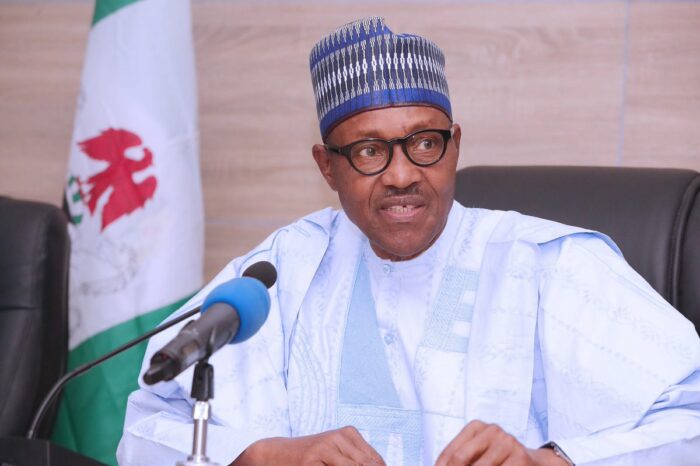
From cash scarcity to ever-evolving insecurity and two recessions, Nigerians were largely negatively impacted by the administration of the late former president Muhammadu Buhari.
Buhari died on Sunday at the age of 82 after a prolonged illness.
Between 2015 and 2023, his government introduced policies that affected millions of people and led to struggles across the country.
FIJ highlights 10 major hardships under Buhari’s leadership that negatively affected many Nigerians.
NAIRA REDESIGN
On October 26, 2022, the Central Bank of Nigeria (CBN), governed at the time by Godwin Emefiele, announced that the federal government was redesigning the N200, N500 and N1,000 banknotes.
At the time, the CBN said that the new directive was to increase the naira’s currency note security and features, prevent counterfeiting and also control the amount of money in circulation.
Emefiele also stated that the redesign had Buhari’s approval and the redesign was to keep up with international best practices.
Coupled with this, two months after the announcement, Emefiele also issued new directives on withdrawals, stating that individuals could only access N20,000 cash per day via ATMs and POS terminals. It was N500,000 per week for corporate entities.
While the deadline for the phasing out of the old naira notes was later extended multiple times, first by the late Buhari and then by the Supreme Court, it had caused Nigerians extreme inconvenience as the currency became scarce.
Long queues formed in banks, and many people were forced to pay huge amounts to access the naira, which is used for everyday transactions.
However, both the old and redesigned banknotes are recognised as legal tenders to date.
ASUU STRIKE
On February 14, 2022, the Academic Staff Union of Universities (ASUU) embarked on an industrial action that lasted eight months, one of the longest union demonstrations in Nigeria’s history.
The strike focused on the federal government’s failure to implement a 2009 memorandum of understanding reached with ASUU as a pain point.
Throughout the period, all universities were shut down and students did not attend lectures. While many university students staged protests and even sued the Buhari government, the strike was not called off until October 14, 2022.
The representatives of the government at the time had accused the union of fixing unreasonable salary packages for its members, this was despite reports showing Nigerian lecturers were the lowest paid globally.
TWITTER BAN
On June 1, 2021, Twitter (now X) deleted a tweet by Buhari for flouting its community rules on violence and hate speech.
The former president had tweeted that “young people would be treated in the language they understand”, following criticism of his administration for turning a blind eye on Boko Haram activities in the North while cracking down hard on terrorists, criminals and secessionist agitators in the South East.

After his tweet was removed, Buhari banned Twitter in Nigeria.
For seven months, Nigerians were unable to access Twitter except through virtual private networks (VPN).
The federal government later lifted the ban and claimed that the platform was made inaccessible to Nigerians due to its propagation of fake news and the polarisation of Nigerians along ethnic and tribal lines.
“The immediate and remote cause of the suspension was the unceasing use of the platform by some unscrupulous elements for subversive purposes and criminal activities, propagating fake news, and polarising Nigerians along tribal and religious lines, among others. These issues bordering on National Security, Cohesion and the effects of the abuse of the Twitter platform forced the FGN to suspend the operation of Twitter to address the direct and collateral issues around its operations in Nigeria,” a part of the federal government’s statement reads.
POLICE BRUTALITY/ENDSARS
In October 2020, thousands of young Nigerians took to the streets in a nationwide protest against police brutality, especially the violent abuses perpetrated by the now-defunct Special Anti-Robbery Squad (SARS).
The #EndSARS movement, which gained quick momentum online, wanted the federal government to scrap the police arm in question.
The protest began following several deaths caused by the police. As soon as the demonstrations hit the streets, the authorities responded with violence.
This protest reached a climax on October 20, when soldiers opened fire on peaceful protesters at Lekki Toll Gate in Lagos.
Initially, the federal government denied that anyone had been killed, but it later reluctantly admitted the fact.
FIJ covered the protests and revealed how the Nigerian Army buried over 100 victims of the protests in mass graves in secret. This was among other atrocities Buhari’s government covered up in the incident.
CLOSED BORDERS
In August 2019, Buhari ordered the closure of Nigeria’s land borders with neighbouring countries such as Benin, Niger and Chad. He said the policy was to control the smuggling of key food products into Nigeria, such as rice, fuel and poultry, but also to boost local production.
However, the policy caused an increase in the price of rice and poultry such as turkey.
By the time the border was reopened in 2020, the consequences had eaten deep, and the prices of food items never went back to normal.
In 2022, Buhari still defended the policy and claimed it was meant to curb smuggling and protect the livelihood of local farmers.
TWO ECONOMIC RECESSIONS
During Buhari’s presidency, Nigeria fell twice into recession, first in 2016 and later in 2020.
In early 2016, Nigeria’s economy fell by 1.6 per cent, largely due to a crash in global oil prices, foreign exchange restrictions and delayed implementation of economic policies. It was Nigeria’s first economic recession in 25 years.
The second recession in 2020 was triggered by the COVID-19 pandemic and falling oil revenues. In that year’s third quarter, the economy contracted by 3.62 per cent, forcing the country into another recession.
Alongside the economic recessions, the naira also weakened significantly under Buhari’s watch.
In May 2015, when Buhari was sworn in, the exchange rate was about N197 to $1 at the official window and about N220 to $1 on the black market.
By the time Buhari left office in May 2023, the naira had dropped to N460 to $1 officially and was trading around N750 to $1 in the parallel market. This steep fall in the naira’s value made imports more expensive and contributed to the rising cost of living in the country.
INSECURITY
Other than the two economic recessions, one of the defining features of the late Buhari’s presidency was widespread insecurity across Nigeria.
Despite his military background and early promises to end terrorism and secure Nigerian lives, the country experienced rising violence, terrorism and kidnappings throughout his tenure.
In March 2022, armed terrorists attacked the federal government-owned Abuja-Kaduna train near Rigasa Train Station in the Igabi Local Government Area of Kaduna.
The terrorists shot at over 970 passengers and took some into captivity for more than three months, forcing their families to pay large ransom sums.
The incident came on the heels of increased banditry in the North West, where entire villages were frequently raided, and hundreds of residents abducted or killed. Zamfara, Katsina and Kaduna states became hotspots of near-daily attacks, forcing thousands to flee their homes.
Boko Haram and Islamic State West Africa Province (ISWAP) remained active in the North East, carrying out attacks on civilians and security forces. In 2020, Boko Haram killed over 100 rice farmers in Zabarmari, Borno State, one of the deadliest attacks under Buhari’s leadership.
The insecurity under the former president quickly spread across states and rural areas, making the movements of goods and services within the country difficult, thus driving inflation.
FUEL PRICE HIKE
When Buhari took office in May 2015, the average pump price of petrol was N87 per litre. By the time he left in May 2023, it had risen to over N185 per litre in most parts of the country, despite his administration’s long-standing subsidy policy.
In May 2016, Buhari’s government removed part of the fuel subsidy, causing the price to jump from N86.50 to N145 per litre overnight. The announcement caused public backlash and fed inflation on essential goods and transportation.
Though the Buhari administration claimed to be paying trillions to subsidise fuel, Nigerians rarely felt the impact.
In 2022, his government said it spent over N4 trillion on fuel subsidies, yet the product remained scarce and overpriced in many areas, especially outside major cities.
CRACKDOWN ON FREE SPEECH
Despite operating under a democratic government framework, the Buhari administration was repeatedly criticised for attacking press freedom and going after dissenting opinions.
One of the most prominent incidents occurred in August 2019, when Omoyele Sowore, the publisher of Sahara Reporters, was arrested by the Department of State Services (DSS) for calling for a nationwide protest tagged #RevolutionNow.
Sowore was held despite multiple courts ordering his release. During one court appearance, DSS agents stormed the courtroom to re-arrest him, sparking national outrage.
In October 2020, during the #EndSARS protests, journalists were attacked and harassed. Notably, Arise TV, Channels TV and AIT were fined by the National Broadcasting Commission (NBC) for what the government described as ‘unprofessional’ coverage of the protests, especially the Lekki Toll Gate massacre.
In August 2021, the Commission fined Trust TV, NTA, Channels and Arise TV for airing a BBC documentary on banditry, claiming the reports ‘glorified terrorism’.
The Buhari government also proposed controversial bills like the Social Media Bill and the Hate Speech Bill, both of which were widely criticised for seeking to criminalise dissent and stifle online expression, but these bills were not passed.
WAYS AND MEANS
During Buhari’s presidency, the federal government borrowed over N23 trillion from the Central Bank through the Ways and Means facility, a loan meant only for emergencies and capped by law. This excessive borrowing, far above the legal limits, worsened inflation and added to Nigeria’s growing debt.

Comments are closed.