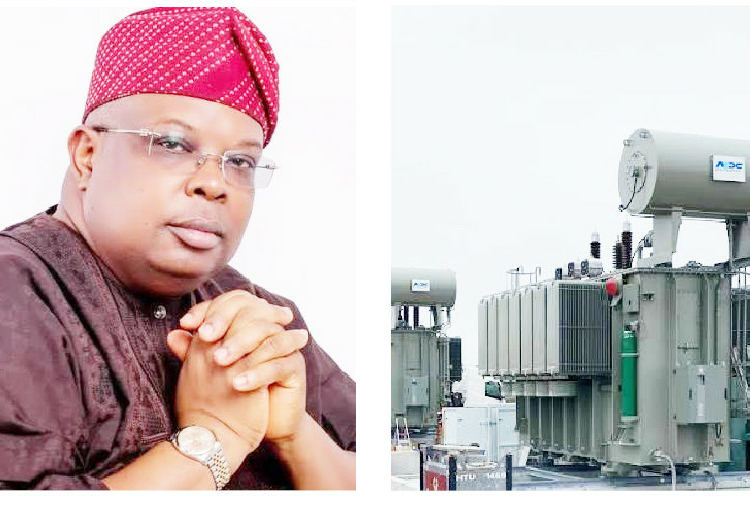

SaySay they still depend on generators, solar
By Attah Anthony, Jalingo; Richard Ndoma, Calabar; Francis Okoye, Maiduguri; Ibrahim Obansa, Lokoja; Aza Msue, Makurdi; Emmanuel Mgbeahurike, Owerri; Abu Nmodu, Minna; Alo Abiola, Ado-Ekiti; Angela Nkwo-Akpolu, Owerri; Felix Igbekoyi, Asaba; Damilola Origbemisuyi, Akure; Abdullahi Olesin, Ilorin; Kabir Wurma, Birnin Kebbi
Nigerians across several states have disputed recent claims by the Minister of Power, Chief Joseph Olasunkanmi Tegbe, that electricity supply has improved so significantly that some Nigerians are asking him to slow down power reforms because their freezers are overworking.
Findings by LEADERSHIP Sunday correspondents across the country show that electricity supply remains uneven. While some communities now receive between 18 and 22 hours of electricity daily, others continue to endure prolonged outages, with some areas getting only a few hours a day or remaining without public electricity for months or even years.
TARABA: Residents Reject Claim of Excess Electricity
Residents of Taraba State have rejected the minister’s claim, insisting that many communities still endure prolonged power outages.
In Jalingo, some areas connected to Band A feeders experience relatively regular electricity supply, including FGGC, Lassandi, GRA, Area Command, Airstrip, Shavon, and Mile Six. Residents of Ussa, Donga, Takum and parts of Wukari also reported a relatively stable supply.
However, findings showed that electricity supply remains poor in many other communities. Of the state’s 16 local government areas and two special development areas, only a limited number of communities were found to enjoy more than 20 hours of electricity daily.
A resident of Mayo-Gwoi in Jalingo, Mrs Josephine Maiso, dismissed the minister’s claim.
“This is not true. I don’t think there is even a 20% electricity supply in this country because we are suffering. In my area, we get at least two hours of electricity, sometimes three hours,” she said.
Another resident, Masuma Ubangida, similarly said her area receives electricity for about two to three hours daily, with occasional periods when residents wait an entire day for the supply to be restored.
“The electricity is not enough for us. Maybe their electricity supply is good where they live, but in our area, we are suffering,” she said.
Similarly, Jalingo-based businesswoman, Mrs Zulie Ibrahim, described the minister’s comment as “the joke of the century,” saying she depends mainly on solar power to operate her deep freezers and preserve drinks because of unreliable public electricity supply.
CROSS RIVER: Communities Groan Under Prolonged Blackout
Residents of Bokomo Community, Four Corners, in Ikom Local Government Area, said they have experienced total blackout since the beginning of the year.
Mrs Stella Edim said the prolonged outage had forced residents to turn to solar energy.
“Not that we don’t have electricity poles, the poles and cables are here. We don’t know what is wrong with the officials at the power holding company, so we haven’t had electricity since the beginning of this year. We have suffered a total blackout,” she lamented.
Mr John Eklegbor, a resident of Akparabong community in Ikom LGA, said his community had been without electricity for three years and called on the authorities to intervene.
He also criticised politicians for abandoning the community after elections.
“They only know us during campaigns when they are seeking political offices and looking for whom to support them. Immediately they achieve their aim, they abandon our community in the blackout,” he said.
In the Calabar metropolis, Mr Augustine Edem of Ekondo Lane, White House Street, complained of epileptic supply. According to him, electricity is available for only about three days in a seven-day week.
“In a week of seven days, we only have electricity for three days in the area,” he said.
BORNO: Maiduguri Residents Still Struggle for Power
Most areas of Maiduguri, the Borno State capital, continue to experience inadequate electricity supply from the Yola Electricity Distribution Company (YEDC).
Babagana Goni, who operates an ice-block business around Hospital Road, said the supply sometimes lasts only three to four hours within a 24-hour period. He said that frozen ice blocks sometimes melt when customers fail to arrive on time, resulting in losses.
Ahmed Ali, a provision store owner in Bolori, said that without the solar installation at his premises, electricity would not last more than five hours a day. Even then, he said, the supply was usually divided between morning and night.
He expressed concern that despite the Maiduguri Gas Plant’s connection to the national grid, they don’t enjoy adequate electricity.

ONDO: Sharp Differences Across Communities
Electricity supply in Ondo State varies significantly from one community to another.
Residents of Oba-Ile in Akure reported more than 22 hours of electricity daily, while those in Alagbaka said they receive between 18 and 20 hours. Residents of Osukoti reported about eight hours.
At Custom Junction along Ondo Road in Akure, however, residents said they sometimes spend two to three days without electricity.
In Akungba-Akoko, home to Adekunle Ajasin University, residents said they receive electricity for barely two hours daily, while Ido-Ani has reportedly been without electricity for years.
Some prolonged outages were attributed by residents to vandalism and infrastructure damage rather than to the national grid. They said electricity wires had been removed by vandals in some communities, and damaged poles had not been repaired.
Across the states surveyed, residents’ experiences show that electricity supply remains uneven. While some Band A communities now report significantly longer hours of supply, many other communities continue to depend on generators and solar systems or endure prolonged blackouts.
GOMBE: Wide Gap Between Communities
Residents of Gombe State reported significant differences in electricity availability between neighbourhoods.
Asmau Dahiru, a resident of Federal Lowcost in Gombe metropolis, said some areas receive approximately 20 hours of electricity daily, while communities such as Bomala and Wuro Biriji receive as little as 3 hours.
Isah Muazu of Zambuk in Kwami Local Government Area said the situation was worse in remote communities, where residents could spend several days without electricity.
The contrasting experiences suggest that while some residents may be enjoying extended electricity supply, others within the same state continue to have inadequate access.
KEBBI: Transmission Line Collapse Worsens Supply
In Kebbi State, electricity supply has also been affected by the collapse of the 330kV Kainji-Birnin Kebbi transmission tower line following heavy windstorms and rainfall.
TCN engineers have been working to restore the transmission corridor, while alternative transmission arrangements have provided a limited supply.
Residents of Birnin Kebbi rejected the minister’s assertion that Nigerians were asking for slower reforms because their freezers were freezing.
Shop owner Mohammed Suleiman asked: “Where is the light? We haven’t had NEPA for over a month.”
He said soft drinks, sachet water, yoghurt, Fura, and other local drinks were destroyed due to the prolonged outage.
Madam Ngozi, an ice-block seller in Jega Local Government Area, said electricity had recently been restored through alternative transmission arrangements but that supply remained limited to about three to four hours daily.
KWARA: Regular Supply in Some Communities
Kwara State presents a more positive picture, with residents reporting substantial improvements compared with previous years.
Mr Kayode Okunola, a resident of the Egbejila-Airport area of Ilorin, said his community now enjoys between 18 and 20 hours of electricity daily.
In Offa, Kwara South, Mr Gbolahan Balogun said residents receive between 8 and 10 hours of electricity daily.
However, LEADERSHIP Sunday observed that many areas in downtown Ilorin receive about five hours of electricity daily, although the supply was described as regular.