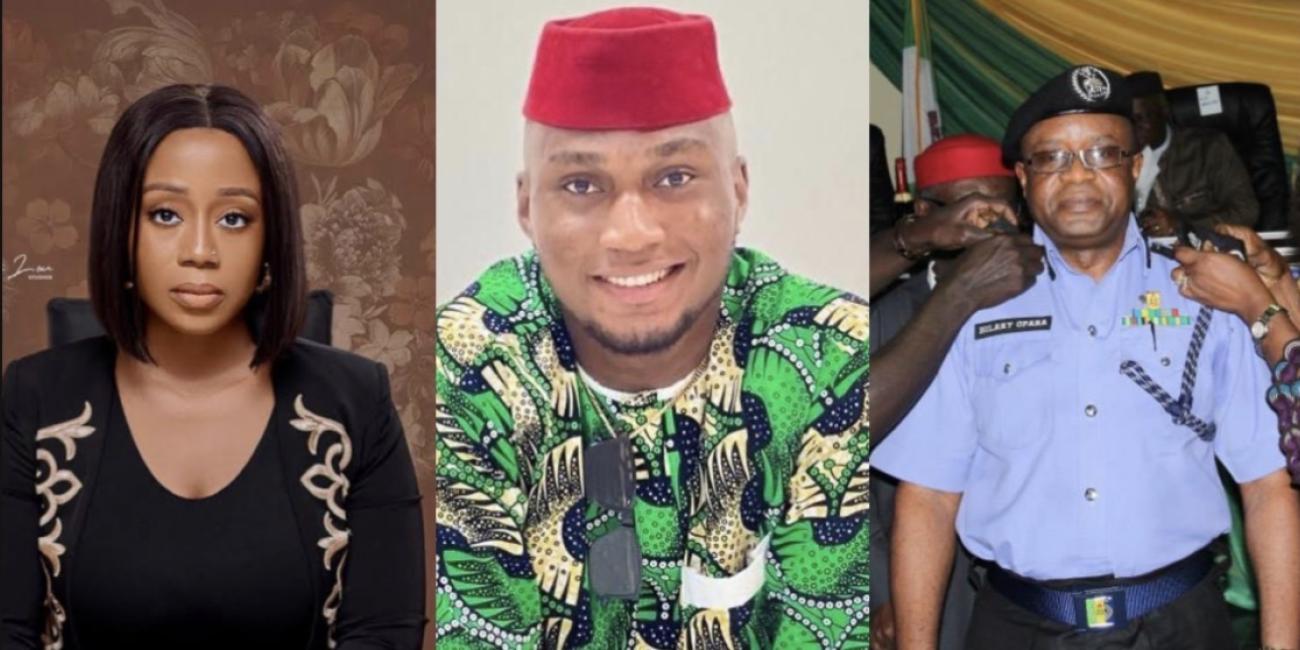

Abuja Businessman Tells Court He Was Denied Medication After Arrest Following Breakup With Ex-DIG Opara’s Daughter.
He alleges that officers arrested him without a warrant in April 2025, denied him access to a lawyer and medical care, and held him in degrading conditions.
Abuja businessman David Nwokorie has accused police officers of unlawfully arresting and mistreating him following a dispute with his former partner, Genevieve Nneoma Opara, and has asked the National Human Rights Commission (NHRC) to investigate a separate allegation that her father tried to influence his treatment in custody.
The allegations appear in a Federal High Court fundamental-rights case and a petition to the NHRC. Nwokorie says his petition is not an attempt to interfere with the criminal case against him, but seeks to ensure he is protected from unlawful treatment while detained.
In the court case, Nwokorie names the Nigeria Police Force, the Inspector-General of Police, the Police Service Commission and Opara as respondents.
He alleges that officers arrested him without a warrant in April 2025, denied him access to a lawyer and medical care, and held him in degrading conditions. The court documents also accuse Opara of entering his home with a police officer and taking or damaging his property.
Alleged break-in and arrest
Nwokorie says he and Opara co-founded the Genieve and David Empowerment Foundation in 2024 and later began a romantic relationship. He alleges that after learning she was married with children, he ended the relationship.
According to his affidavit, Opara went to his home on January 25, 2025, accompanied by a police officer identified as Gozie Opara. Nwokorie alleges that the pair forced their way inside while he was away, damaged furniture and electronics, and took valuables including jewellery, shoes, wristwatches and money.
He says Opara later apologised and promised to return the items and compensate him for the damage. After she allegedly failed to do so, Nwokorie instructed a solicitor to demand ₦25 million in restitution.
The court documents say he was arrested on April 9, 2025, while waiting for a ride outside the National Pension Commission. He alleges that officers handcuffed and blindfolded him, called him a criminal and said he was wanted. He says he was taken to the National Cybercrime Centre and held in a dark room.
Nwokorie says officers told him he “will not smell the outside world again.”
He alleges that police were investigating a petition accusing him of extortion, threats to life and blackmail, but refused to give him a copy. He further claims officers dictated a statement for him, refused his request to contact his lawyer and seized his phone.
The affidavit says he was made to sleep on a cold floor without clothing or a covering, became ill and was denied medication. Nwokorie alleges that he collapsed and was later given two injections without receiving proper medical care.
He also alleges that Commissioner of Police Ifeanyi Henry Uche insulted him, saying: “You are an idiot and I know you committed the crimes you were accused of, in fact we will verify if you truly graduated from the university as you claimed.”
The court application asks the Federal High Court to determine whether Nwokorie’s fundamental rights were breached. The material supplied says he is seeking ₦100 million in damages, but does not include the full list of orders requested.
Petition alleges call to Kuje official
In a petition dated September 23, 2026, Nwokorie asked the NHRC and other authorities to investigate an alleged call to an officer in charge of Kuje Custodial Centre on or about July 20.
Nwokorie identifies the caller as retired Deputy Inspector-General of Police Hilary Opara, whom he describes as the father of Genevieve Opara, the nominal complainant in the criminal case against him. He alleges that the retired officer sought to influence his treatment in custody, including by asking that he be chained, tortured, humiliated or intimidated.
Nwokorie says the correctional official did not comply with the alleged request and later informed him of the call. He quoted the official as saying: “The father of the nominal complainant called me and asked me to … ‘treat your f***-up.’”
He has asked investigators to identify the caller and recipient, establish what was said, and preserve phone records, call logs, CCTV footage, visitor records and internal communications. He also wants the correctional official and other staff interviewed confidentially.
Nwokorie says the allegation must be investigated, but cautioned against assuming that relatives were involved simply because of their family connection. “The fact that a person is related to a complainant cannot itself establish liability,” he said. “Equally, a family relationship should not prevent an investigation where specific allegations of unlawful interference have been made.”
The petition’s claim resembles allegations in a SaharaReporters report published in July, which cited sources at Kuje who said Hilary Opara had contacted correctional authorities and sought harsher treatment for Nwokorie.
A correctional official was quoted as saying: “We were shocked by the request. We simply told him not to worry, but that does not mean anybody agreed to carry out what he allegedly wanted,” the source said.
Bail and continued detention
Nwokorie’s petition also raises questions about his continued detention after a reported bail ruling. He says Justice Rita Ofili-Ajumogobia of the Federal High Court granted him bail on July 14, but that he remained at Kuje because of stringent conditions, including a requirement for a serving Nigerian Army colonel to act as surety
He has asked authorities to verify the terms against the certified court ruling and investigate whether anyone attempted to undermine the order or influence its implementation.
“A bail order is a judicial instrument,” Nwokorie said. Its implementation, he added, should be governed by the law and the court’s directions “not by personal influence, private retaliation or the wishes of a complainant’s relative.”
The petition asks the NHRC and other agencies to assess his safety, ensure that only lawful correctional authorities direct his treatment, preserve evidence and refer any suspected criminal conduct to an independent investigative body. It also seeks protection for potential witnesses against intimidation or retaliation.
Nwokorie cited the constitutional prohibition on torture and cruel, inhuman or degrading treatment, as well as Nigeria’s obligations under international human-rights instruments and the Anti-Torture Act 2017.
“I am not asking any human-rights institution to determine the merits of the criminal allegations against me,” he said. “My complaint concerns the separate issue of whether I have been or may be subjected to unlawful treatment, intimidation or punishment outside the procedures authorised by law.”