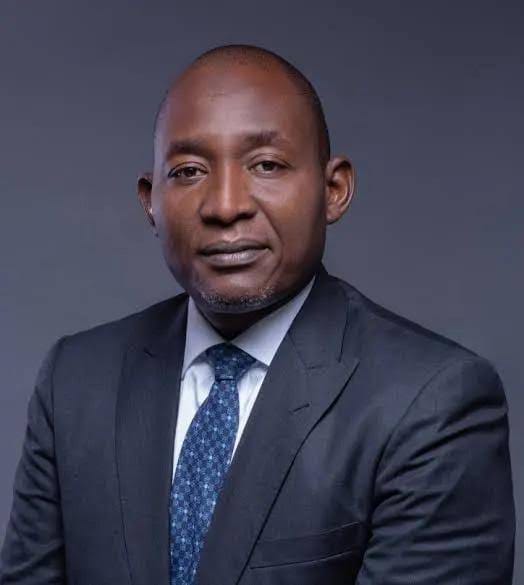

Mallam Rabiu Abdullahi Umar was nominated as the Chief Executive Officer of Nigeria Midstream and Downstream Petroleum Regulatory Authority in April by President Bola Ahmed Tinubu.
The Nigerian Senate however confirmed his appointment in May, 2026.
Though he was regarded as an ‘outsider’, with his pedigree of formal and informal education at Bayero University, Kano and Harvard, Unipetrol, Oando, Lafarge, Ashaka and Dangote coupled with his own personal entrepreneurship, Mallam Umar looked prepared for the yeoman task that had consumed two CEOs in a few months before his nomination.
The last six months must have tested his wits with the avalanche of challenges he met on the job especially as regards that ensuring a leveled playing field for both refinery owners and those eager to import Petroleum products. Again there has been the challenge of proper pricing, ensuring safe delivery of products as well as generating investments especially for the gas sector.
One thing the NMDPRA under Mallam Rabiu Umar can however pride itself in is round-the-clock monitoring of petroleum products transportation with a view to ensuring compliance with operational standards.
Apart from routine sensitization programmes, the Authority has also embarked on training of truck drivers with a view to deepening safety awareness among petroleum operators and tanker drivers. These training programmes have taken place in various parts of the country, given the wide scope of tanker drivers’ coverage.
The latest of such trainings, which took place in Warri Delta State dwelt on defensive driving, hazard recognition, fatigue management, fire prevention, spill containment, tanker integrity as well as emergency response.
Undoubtedly, this aspect touches the very heart of every community that petroleum products are moved through, increased sensitization of tanker drivers, safety of roads mean lesser accidents and reduced tanker carnages.
In terms of consumer protection and fair competition, Umar’s leadership has been able to steer NMDPRA away from the controversies of the past that contributed to the ousting of his predecessors.
Keeping the generality of Nigerians in focus, Umar has personally voiced out his commitment and that of the Authority to consumer protection and market stability given the fact that the government no longer determine the price of petroleum products.
In a series of meetings with various stakeholders including the Consumer Protection body, FCCPC, agreements were reached with a view to monitoring products’ prices to protect against price gouging, collusion, under-dispensing as well as compromised product quality.
’Acknowledging the economic pressure higher fuel costs place on households, businesses, and transport workers, the regulator has always stressed that its statutory role, market monitoring mechanisms, and joint security operations are all aimed at safeguarding supply integrity’.
“The Authority has also been conducting joint security effort with the Nigeria Customs Service and other relevant security agencies to intensify surveillance along border corridors and prevent product smuggling.
The Authority under Umar’s leadership has also announced plans to open a dedicated feedback and reporting channels to enable members of the public and industry stakeholders report irregular pricing or exploitative trade practices directly for immediate regulatory investigation and enforcement.
It is perhaps his drive for investments in the sector that has singled out Abdullahi Umar’s first six months in office.
Using every opportunity or forum presented to him, the CEO of the Authority has reiterated the need for more of investments in the Downstream and Midstream Sectors of the oil industry.
At a meeting with the Nigeria Governors Forum in August, the NMDPRA Chief Executive identified areas of collaboration to include “gas- to- power projects, the expansion of Compressed Natural Gas, CNG for transportation, increased adoption of Liquified Petroleum Gas LPG clean cooking initiatives, embedded power generation, and other strategic interventions designed to enhance energy access and drive economic growth.”
The drive for investments has not been limited to Nigeria alone. Mallam Rabiu Abdullahi Umar Umar has taken the crusade to virtually every forum that presents itself.
Weeks back, at the Gastech Conference in Bangkok, Thailand he revealed that the NMDPRA target is targeting up to 10 billion dollars in gas investments through its Midstream and Downstream Gas Infrastructure Fund.
There is no gainsaying the fact that this is a tall ambition but given the fact that he has stabilized the system since his appointment, it is realizable.
There are still forces angling for spaces within the NMDPRA orbit however. As refinery owners drag the Authority so also those importing petrol test the laws that establish the NMDPRA to see if there are loopholes for them to maximize their influence.
The challenges in the oil and gas sector in terms of distribution, attraction of investments are also there.
The NMDPRA’s leadership’s ability to weather through all these forces trying to assert itself has proven that the team is committed to ensuring that it fulfills its core mandate.
6 months may be too early to assess a 5-year term, but with the way Mallam Rabiu Abdullahi Umar has started there’s no doubt that there are interesting times ahead and the various sectors touched by the NMDPRA mandate, including the common man on the streets will be impacted positively by his tenure.
Bamidele Ogundana